New Government Teaching Web Portals 2026 : DIKSHA, SWAYAM, PM eVIDYA, and More
«21-Oct-2026
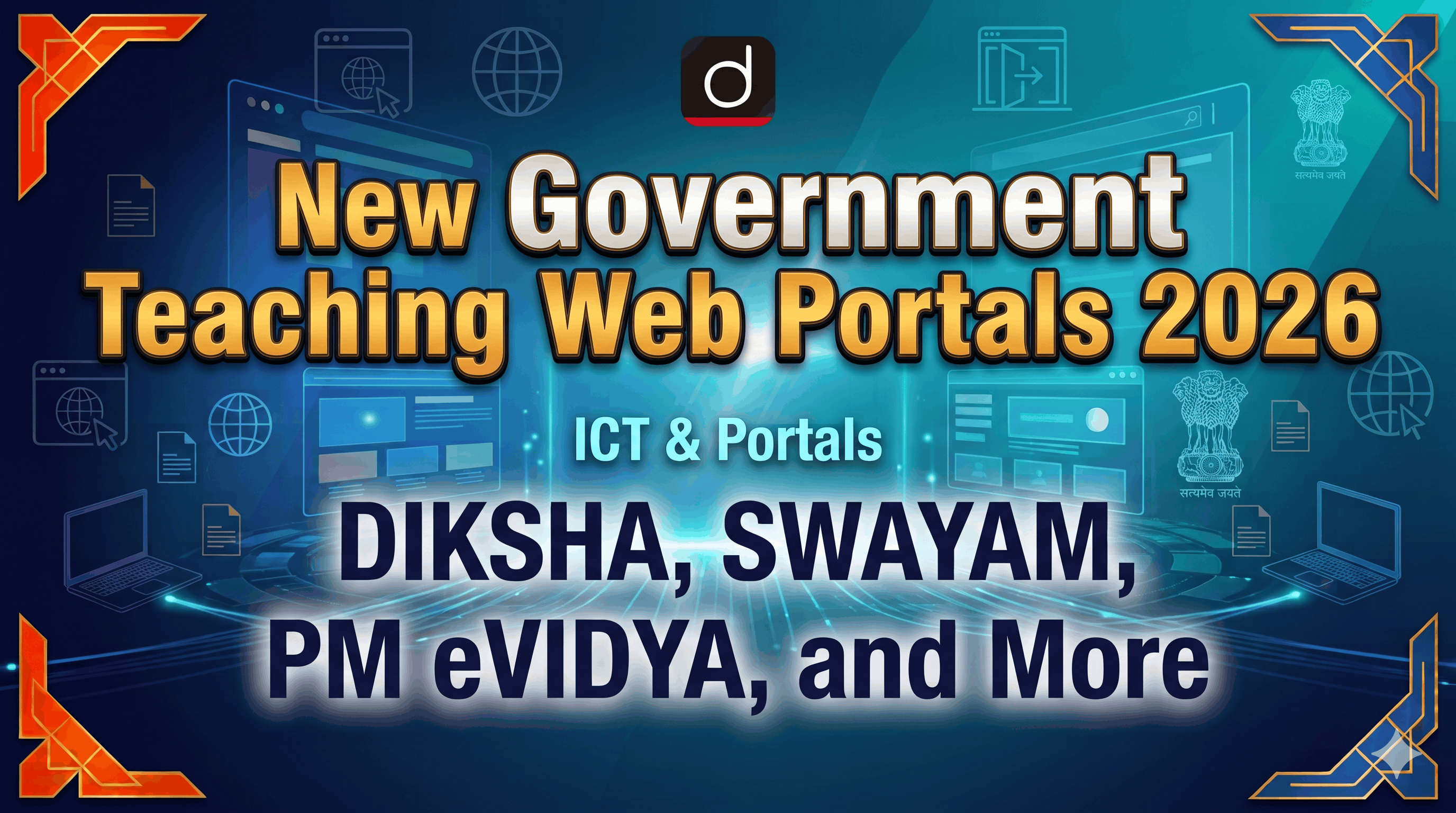
India's digital education infrastructure is organized under the umbrella PM e-VIDYA initiative, launched by the Ministry of Education under the vision of "One Nation, One Digital Education Infrastructure," aligned with the National Education Policy (NEP) 2020. The initiative unifies web portals, mobile applications, DTH television channels, radio broadcasts, and specialized accessibility tools to provide multi-mode learning access.
For candidates preparing for CTET, UPTET, HTET, UGC NET Paper 1, and other examinations, understanding these portals is useful for developing ICT knowledge and revising educational technology concepts.

1. DIKSHA (Digital Infrastructure for Knowledge Sharing)
Official website: https://diksha.gov.in/
Launched in 2017, it is a national digital platform supporting school education and teacher development. Under the PM eVIDYA initiative, DIKSHA is recognised as an important digital platform for educational resources.
- Key Features of DIKSHA
- Digital textbooks, educational videos, worksheets, and interactive learning content.
- QR-code-enabled resources linked to school textbooks.
- Teaching-learning materials for different subjects and grades.
- Teacher professional development courses and learning resources.
- Content in multiple Indian languages.
- Quizzes, assessments, and resources for inclusive education.
- How Is DIKSHA Useful for Teachers?
Teachers can use DIKSHA to access lesson plans, classroom activities, digital resources, and professional development opportunities. Students can use the platform to revise topics and explore supplementary learning materials.
For teaching-exam aspirants, DIKSHA is an important example of how ICT supports school education and teacher training.
2. SWAYAM Portal (Study Webs of Active-Learning for Young Aspiring Minds)
Official website: https://swayam.gov.in/
It is a Government of India initiative that provides online courses across different educational levels, from school education to postgraduate studies.
- Key Features of SWAYAM
- Online courses prepared by subject experts and participating institutions.
- Video lectures and downloadable reading materials.
- Online quizzes, self-assessment tests, and discussion forums.
- Courses across humanities, science, technology, management, and other disciplines.
- Opportunities to pursue eligible courses for academic credit, subject to applicable institutional rules.
Many SWAYAM courses can be accessed free of charge. However, learners seeking certification may need to register for a separately conducted examination and pay the applicable fee. Course-specific conditions should be checked before enrolment.
- Importance of SWAYAM for Teachers
SWAYAM enables teachers and aspiring educators to expand their subject knowledge, explore new teaching approaches, and pursue professional learning. It is also useful for learners seeking structured online courses from recognised educational institutions.

3. PM eVIDYA: A Multi-Mode Digital Education Initiative
Official website: https://pmevidya.education.goa v.in/
PM eVIDYA is a Government of India initiative that brings together digital, online, and broadcast-based educational resources. It supports access to learning through different modes, including online platforms, television, radio, and specialised educational content.
- Key Features of PM eVIDYA
- Integration of digital and broadcast-based learning resources.
- Access to DIKSHA and SWAYAM-related educational initiatives.
- Educational television channels and learning programmes.
- Radio and community-radio learning resources for learners with limited internet access.
- Special educational content for Children with Special Needs (CWSN).
- Why Is PM eVIDYA Important?
PM eVIDYA supports learners who may not have reliable access to online classes. By combining digital platforms with television and radio, it offers alternative ways to access educational content.
For teachers, the initiative highlights the importance of inclusive education and multiple modes of content delivery.
4. SWAYAM PRABHA: Educational DTH Channels
Official website: https://pmevidya.education.gov.in/
SWAYAM PRABHA is an educational television broadcaster that provides learning programmes through dedicated DTH channels. It helps learners access educational content even when internet connectivity is limited.
- Key Features
- Educational television programmes for different learning levels.
- Access to lessons and subject-related content through television.
- Support for learners in remote and underserved areas.
- An alternative to internet-dependent learning.
SWAYAM PRABHA is particularly useful when online video platforms are difficult to access. Learners should consult the official portal for current channel details and schedules.

5. ePathshala: Digital Textbooks and Learning Resources
Official website: https://epathshala.nic.in/
ePathshala is an educational platform associated with the National Council of Educational Research and Training (NCERT). It provides access to digital educational resources, including textbooks and supplementary materials.
- Key Features
- Digital textbooks for school education.
- Educational resources for students and teachers.
- Access to learning materials through supported digital devices.
- Convenient access to resources for revision and classroom preparation.
- Benefits for Teachers and Students
Teachers can use digital textbooks while preparing lessons, and students can access learning materials for revision. The platform can also support learning when printed books are unavailable.
Users should check the official portal for the availability of specific textbooks and resources.

6. National Digital Library of India (NDLI)
Official website: https://ndl.iitkgp.ac.in/
The National Digital Library of India is a digital repository initiative developed by IIT Kharagpur with support from the Ministry of Education. It provides a central platform for discovering educational resources from different sources.
- Key Features
- Access to a wide range of digital learning resources.
- Materials for school students, university learners, researchers, and educators.
- Resources across multiple subjects and academic levels.
- Search facilities to help users discover relevant study materials.
- How Can Teachers Use NDLI?
Teachers and students can use NDLI to discover supplementary reading materials, reference resources, and academic content. It can support lesson preparation, assignments, research, and independent learning.
Access conditions may vary depending on the resource, so users should review the details provided on the platform.
7. SWAYAM Plus: Industry-Relevant Learning
Official website: https://swayamplus.education.gov.in/
SWAYAM Plus is an initiative of the Ministry of Education implemented through IIT Madras. It focuses on industry-relevant learning, skill development, and opportunities to connect learning with career needs.
- Key Features
- Courses designed around industry and professional skills.
- Participation by industry partners and educational organisations.
- Opportunities to pursue relevant learning pathways.
- Academic credit opportunities where applicable.
- Multilingual learning support and a combination of free and paid courses.
- Importance for Educators
SWAYAM Plus can help educators explore professional development opportunities and skills relevant to changing workplace requirements. Before enrolling, users should check the course fee, eligibility, duration, and certification conditions.
8. SATHEE (Self-Assessment, Test, and Help for Entrance Examination)
Launched by the Ministry of Education in partnership with IIT Kanpur, SATHEE is a dedicated digital learning platform for competitive entrance exams.
- Exam Coverage: Offers test preparation support for examinations including JEE, NEET, CUET, SSC, IBPS, and ICAR.
- Platform Tools: Provides live/recorded lectures by faculty from IITs and AIIMS, daily practice problems, mock test series, mentorship, and a repository of 80,000+ exam-aligned questions with AI-driven study analytics.
- Multi-Device Access: Available via web portal, iOS/Android mobile applications, and 7 dedicated DTH SWAYAM Prabha channels.

9. Other Important Government Education Platforms
In addition to the major portals discussed above, several other platforms support digital learning and teacher development.
- National Council of Educational Research and Training (NCERT): The official NCERT website provides curriculum-related information, publications, textbooks, and educational resources.
- Website: https://ncert.nic.in/
- National Institute of Open Schooling (NIOS): NIOS provides open and distance learning opportunities for eligible learners and publishes information about its academic programmes and examinations.
- Website: https://nios.ac.in/
- National Programme on Technology Enhanced Learning (NPTEL): NPTEL offers online courses and educational content, particularly in engineering, science, and related disciplines, through a collaboration involving IITs and IISc.
- Website: https://nptel.ac.in/
- National Repository of Open Educational Resources (NROER): NROER supports the discovery and sharing of open educational resources for teaching and learning.
- Website: https://nroer.gov.in/
The availability, format, and access conditions of individual resources may vary by platform.
- Benefits of Government Teaching Web Portals in 2026
Government education portals offer several advantages for teachers, students, and teacher-exam aspirants.
1. Easy access to educational resources: Digital textbooks, video lectures, worksheets, and other materials can be accessed online through supported devices.
2. Support for teacher training: Platforms such as DIKSHA and SWAYAM provide opportunities to explore professional learning resources.
3. Flexible learning: Learners can use online resources for revision and independent study, depending on course and platform access conditions.
4. Support for inclusive education: Multilingual content, broadcast-based learning, and specialised resources can help address different learning needs.
5. Digital literacy: Regular use of educational platforms can improve digital skills and familiarity with technology-supported teaching.
6. Better lesson preparation: Teachers can explore supplementary materials and use appropriate digital resources to make lessons more engaging.
- How to Use Government Education Portals Effectively
Teachers and students can make better use of these platforms by following a few simple steps:
- Identify the learning objective before choosing a portal.
- Select resources relevant to the subject, grade, or examination syllabus.
- Check the source, publication details, and accuracy of the material.
- Make notes while watching lectures or reading digital textbooks.
- Complete available quizzes and practice activities.
- Check course deadlines, examination requirements, and certification conditions where applicable.
- Combine digital learning with textbooks, classroom discussions, and regular revision.
Explore Drishti Publications Complete Teaching Exams Book Series
Conclusion
Government teaching web portals are an important part of India's digital education ecosystem. DIKSHA supports school learning and teacher development; SWAYAM provides online courses; PM eVIDYA brings together different modes of educational delivery; SWAYAM PRABHA offers educational television content; ePathshala provides digital learning resources; and NDLI helps users discover academic materials.
For teachers, students, and competitive-exam aspirants, understanding these platforms can improve digital literacy and strengthen knowledge of educational technology. Using reliable government portals alongside textbooks, practice questions, and structured revision can make learning more accessible and effective.
Frequently Asked Questions (FAQs)
|
Must Read: |
Blog Collection
Teaching Exams
History, Thoughts & The World
From The Arts
Psychology & The Individual
Unconventional Wisdom
Civil & Family Law
Criminal Justice System
Environmental and Sustainability Law
Data Privacy and Cybersecurity
Alternative Dispute Resolution
Legal Precedents
Acts and Bills
Bankruptcy and Restructuring
Corporate Governance
Constitutional Law and Public Policy
Contemporary Legal Developments
Law & Society
RECENT POSTS
New Government Teaching Web Portals 2026 : DIKSHA, SWAYAM, PM eVIDYA, and More
CTET vs HTET vs UPTET vs Bihar STET : Validity & State-wise Acceptance Compared
Use of ICT in Education : From Digital Classrooms to AI Tools
CTET 2026 Complete Guide : Eligibility, Syllabus, Exam Pattern & Passing Marks
Bihar STET Paper 1 vs Paper 2 : Syllabus & Preparation Strategy 2026
EMRS Tier-2 Result 2026 Out: What’s Next? Document Verification (DV) Process Explained
Why Bihar STET Exam Matters?
Bihar STET 2026 Notification Released : Check Eligibility, Exam Dates, Application Fees & CBT Pattern
Best Online Course for BPSC TRE 4.0 2026
How to Choose the Right UGC-NET/JRF Books? Drishti Publications UGC-NET Series
POPULAR POSTS
New Government Teaching Web Portals 2026 : DIKSHA, SWAYAM, PM eVIDYA, and More
CTET vs HTET vs UPTET vs Bihar STET : Validity & State-wise Acceptance Compared
Use of ICT in Education : From Digital Classrooms to AI Tools
CTET 2026 Complete Guide : Eligibility, Syllabus, Exam Pattern & Passing Marks
Bihar STET Paper 1 vs Paper 2 : Syllabus & Preparation Strategy 2026
EMRS Tier-2 Result 2026 Out: What’s Next? Document Verification (DV) Process Explained
Why Bihar STET Exam Matters?
Bihar STET 2026 Notification Released : Check Eligibility, Exam Dates, Application Fees & CBT Pattern
Best Online Course for BPSC TRE 4.0 2026
How to Choose the Right UGC-NET/JRF Books? Drishti Publications UGC-NET Series