
Use of ICT in Education : From Digital Classrooms to AI Tools
« »17-Oct-2026
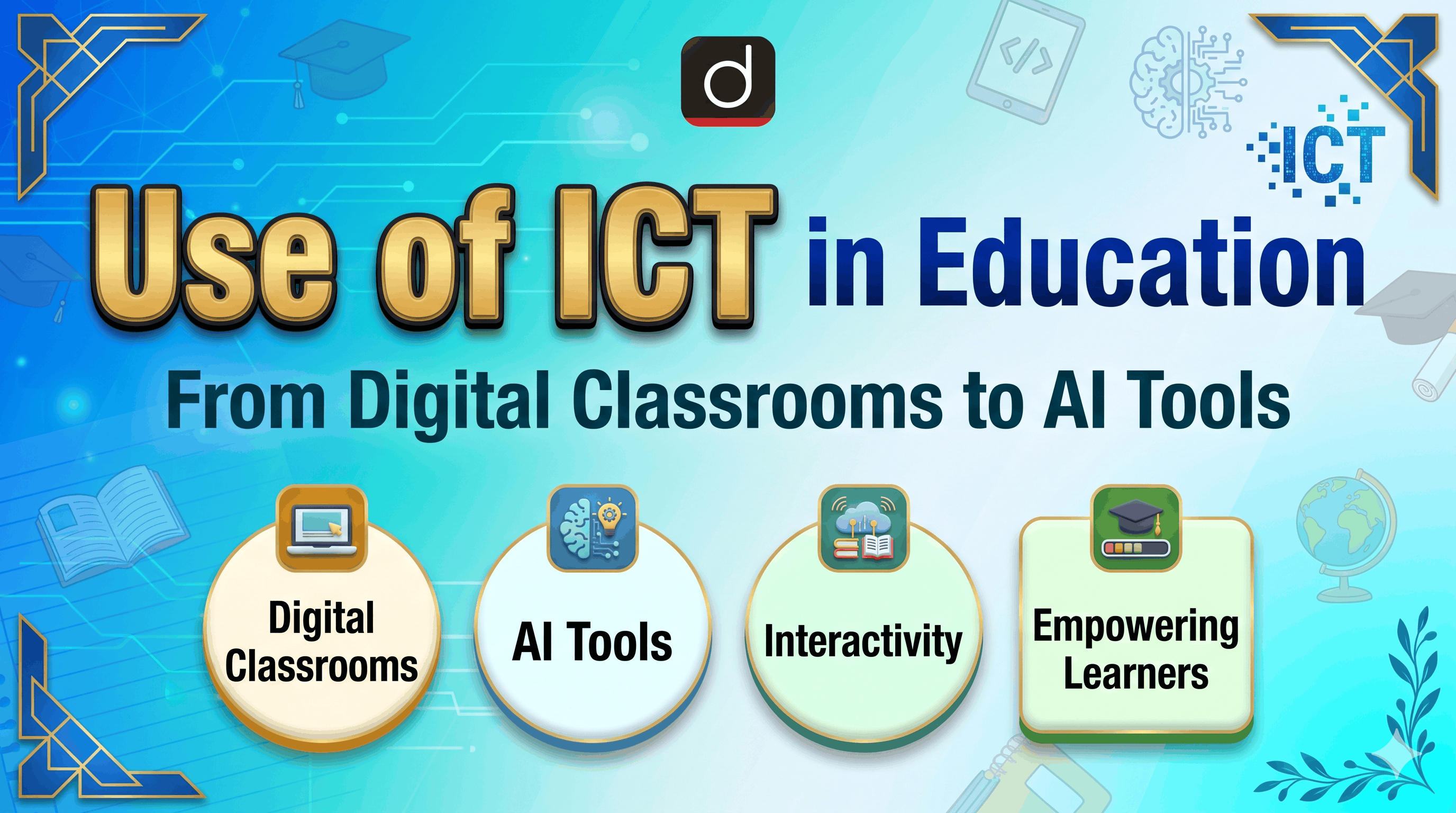
The use of ICT in education has transformed the way teachers teach and students learn. Information and Communication Technology (ICT) includes digital tools, computers, the internet, educational applications, smart boards, and Artificial Intelligence (AI) tools that support the teaching-learning process. From digital classrooms and online courses to AI-powered learning platforms, technology is making education more interactive, accessible, and flexible.
In modern education, ICT helps teachers explain complex concepts, provide learning resources, assess student performance, and encourage active participation. Understanding the role of ICT is also important for aspiring teachers preparing for teaching eligibility and recruitment examinations such as CTET, HTET, UPTET, and other state-level teaching exams.
What Is ICT in Education?
ICT stands for Information and Communication Technology. In education, it refers to the use of digital technologies to create, deliver, manage, and improve learning experiences.
ICT includes computers, laptops, projectors, smart boards, educational websites, video lectures, digital libraries, online assessment platforms, and AI-based educational tools. These technologies support classroom teaching as well as distance and blended learning.
For example, a teacher can use an interactive presentation to explain a science topic, share digital notes with students, conduct an online quiz, or use an educational application to provide additional practice questions.
Importance of ICT in Education
The integration of ICT has become an important part of modern teaching because it supports different learning needs and creates opportunities for more engaging instruction.
1. Makes Learning Interactive
Digital presentations, educational videos, animations, and simulations help teachers explain difficult topics in an engaging way. Students can understand abstract concepts through visual demonstrations and interactive activities.
2. Provides Access to Digital Resources
Students can access e-books, online lectures, digital libraries, educational websites, and practice materials beyond the traditional classroom. This enables learners to revisit lessons and study at their own pace.
3. Supports Personalised Learning
Digital learning platforms can offer practice activities and feedback based on a student's progress. Teachers can use this information to identify learning gaps and provide additional support where required.
4. Improves Communication and Collaboration
Online classrooms, discussion forums, shared documents, and learning management systems allow teachers and students to communicate, exchange resources, and work on assignments collaboratively.
5. Helps Teachers Assess Student Progress
Online quizzes, digital assignments, and automated scoring tools can help teachers evaluate student understanding. The results can guide revision, remedial teaching, and lesson planning.

ICT in Education: From Digital Classrooms to Online Learning
The use of ICT extends beyond the installation of computers or projectors in classrooms. It includes a range of digital teaching and learning methods.
Digital Classrooms and Smart Boards
Digital classrooms use projectors, interactive displays, multimedia presentations, and internet-based resources to support teaching. Smart boards enable teachers to annotate diagrams, display educational videos, and involve students in interactive activities.
Online Learning Platforms
Online learning platforms provide access to video lectures, study material, assignments, quizzes, and recorded classes. They allow students to revisit topics and learn outside regular classroom hours.
Learning Management Systems (LMS)
A Learning Management System is a digital platform used to organise educational content, distribute assignments, monitor progress, and manage assessments. Teachers can use an LMS to share notes, communicate deadlines, and track student participation.
Digital Assessment Tools
Online tests and quiz applications help teachers check student understanding and provide timely feedback. These tools can also help students identify weak areas and revise important concepts.

Role of Artificial Intelligence (AI) in Education
Artificial Intelligence is expanding the role of ICT by introducing tools that can support content creation, personalised practice, feedback, and administrative tasks.
1. AI-Powered Personalised Learning
AI-enabled educational platforms may adapt practice questions or learning recommendations according to a student's performance. This can help learners focus on concepts that need additional attention.
2. AI Tools for Teachers
Teachers can use AI tools to develop lesson plans, generate question ideas, prepare revision activities, simplify explanations, and create draft worksheets. However, teachers should review AI-generated content for accuracy, curriculum alignment, and age appropriateness before using it in class.
3. Virtual Tutors and Chatbots
AI-powered chatbots can answer basic academic questions, explain concepts, and provide additional practice. They can support learning, but they may sometimes produce incorrect or misleading answers, so important information should be verified.
4. Automated Feedback and Assessment
Some AI systems can assist with feedback, performance analysis, and assessment-related tasks. Teachers should use these systems carefully, especially when evaluating open-ended answers or making important decisions about students.
5. AI for Inclusive Education
Speech-to-text tools, text-to-speech applications, captions, translation tools, and other accessibility features can help learners with different language needs and disabilities participate more effectively in education.

Challenges of Using ICT in Education
Although ICT offers several benefits, its effective implementation requires planning and support.
- Digital divide: Not every student has reliable internet access or a suitable digital device.
- Lack of digital skills: Teachers and students may require training to use educational technologies effectively.
- Technical problems: Internet interruptions, device failures, and software issues can disrupt lessons.
- Privacy and data security: Educational institutions must protect students' personal information and use digital platforms responsibly.
- Overdependence on technology: Excessive screen-based activities may reduce opportunities for face-to-face discussion, practical work, and interpersonal interaction.
- AI-related concerns: AI tools may generate inaccurate information, reflect biases, or raise questions about originality and academic integrity.
To address these challenges, schools should provide teacher training, promote digital literacy, establish responsible technology-use policies, and combine digital resources with classroom interaction and practical activities.
Role of ICT in Teacher Education and Competitive Exams
ICT is an important topic in educational theory and teaching aptitude. Candidates preparing for CTET, UPTET, HTET, UGC NET Paper 1, and other teaching examinations may encounter questions related to computer-assisted learning, digital classrooms, online education, e-learning platforms, and the use of technology in assessment.
Aspirants should understand the meaning of ICT, its educational applications, advantages, limitations, and the role of AI in modern teaching. Practicing multiple-choice questions and revising key concepts can help candidates strengthen their understanding of this topic.
How Teachers Can Use ICT Effectively
Teachers can make technology more useful by following a few practical strategies:
- Set clear learning objectives: Select digital tools according to the lesson's learning goals.
- Choose reliable resources: Use accurate, curriculum-aligned digital content.
- Encourage active participation: Include quizzes, group tasks, demonstrations, and discussions.
- Check understanding: Use short assessments and student feedback to evaluate learning.
- Protect student privacy: Follow institutional guidelines when using digital platforms and AI tools.
- Maintain a balanced approach: Combine technology with discussion, reading, hands-on activities, and direct teacher guidance.
- ICT is most effective when it supports sound teaching practices rather than replacing the teacher's role.
Explore Our Mahapack Courses Now!
Conclusion
The use of ICT in education has transformed traditional classrooms into more flexible, interactive, and resource-rich learning environments. Digital classrooms, online learning platforms, and AI tools offer new ways to explain concepts, assess progress, and support individual learning needs. At the same time, issues such as unequal access, privacy, digital literacy, and AI accuracy must be addressed responsibly.
For teachers and aspiring educators, understanding ICT is essential for developing effective teaching strategies and adapting to the changing educational landscape. A balanced combination of technology, teacher guidance, and active student participation can make learning more meaningful and inclusive.
Frequently Asked Questions (FAQs)
|
Must Read: |
Blog Collection
Teaching Exams
History, Thoughts & The World
From The Arts
Psychology & The Individual
Unconventional Wisdom
Civil & Family Law
Criminal Justice System
Environmental and Sustainability Law
Data Privacy and Cybersecurity
Alternative Dispute Resolution
Legal Precedents
Acts and Bills
Bankruptcy and Restructuring
Corporate Governance
Constitutional Law and Public Policy
Contemporary Legal Developments
Law & Society
RECENT POSTS
New Government Teaching Web Portals 2026 : DIKSHA, SWAYAM, PM eVIDYA, and More
CTET vs HTET vs UPTET vs Bihar STET : Validity & State-wise Acceptance Compared
Use of ICT in Education : From Digital Classrooms to AI Tools
CTET 2026 Complete Guide : Eligibility, Syllabus, Exam Pattern & Passing Marks
Bihar STET Paper 1 vs Paper 2 : Syllabus & Preparation Strategy 2026
EMRS Tier-2 Result 2026 Out: What’s Next? Document Verification (DV) Process Explained
Why Bihar STET Exam Matters?
Bihar STET 2026 Notification Released : Check Eligibility, Exam Dates, Application Fees & CBT Pattern
Best Online Course for BPSC TRE 4.0 2026
How to Choose the Right UGC-NET/JRF Books? Drishti Publications UGC-NET Series
POPULAR POSTS
New Government Teaching Web Portals 2026 : DIKSHA, SWAYAM, PM eVIDYA, and More
CTET vs HTET vs UPTET vs Bihar STET : Validity & State-wise Acceptance Compared
Use of ICT in Education : From Digital Classrooms to AI Tools
CTET 2026 Complete Guide : Eligibility, Syllabus, Exam Pattern & Passing Marks
Bihar STET Paper 1 vs Paper 2 : Syllabus & Preparation Strategy 2026
EMRS Tier-2 Result 2026 Out: What’s Next? Document Verification (DV) Process Explained
Why Bihar STET Exam Matters?
Bihar STET 2026 Notification Released : Check Eligibility, Exam Dates, Application Fees & CBT Pattern
Best Online Course for BPSC TRE 4.0 2026
How to Choose the Right UGC-NET/JRF Books? Drishti Publications UGC-NET Series